
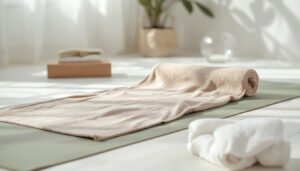
Do You Need a Yoga Towel? Benefits, Uses & Tips
Do You Need a Yoga Towel? Benefits, Uses & Tips Introduction Have you ever noticed your hands slipping on your...
Read More →

Which Side of Yoga Mat Is Up? A Simple Guide
Which Side of Yoga Mat Is Up? A Simple Guide Introduction Have you ever unrolled your yoga mat and wondered...
Read More →

How Long Do Yoga Mats Last? Lifespan, Wear Signs & Care
How Long Do Yoga Mats Last? Lifespan, Wear Signs & Care Introduction Have you noticed your yoga mat becoming slippery...
Read More →

What Is Hatha Yoga Compared to Vinyasa? Benefits & Differences
Introduction Have you ever joined a yoga class and wondered why some people move slowly while others flow from one...
Read More →

Mountain Magic Aura Cork Yoga Mat: A Complete Guide to Materials, Grip, and Care
Introduction Do your knees complain halfway through a lunge on a hardwood floor? The Mountain Magic Aura cork yoga mat...
Read More →

Are Yoga Mats Bad for the Environment? The Truth & Best Alternatives
Are Yoga Mats Bad for the Environment? The Truth & Best Alternatives Introduction Ever wondered if your trusty yoga mat...
Read More →